Oil-in-water emulsion: stabilisation and production
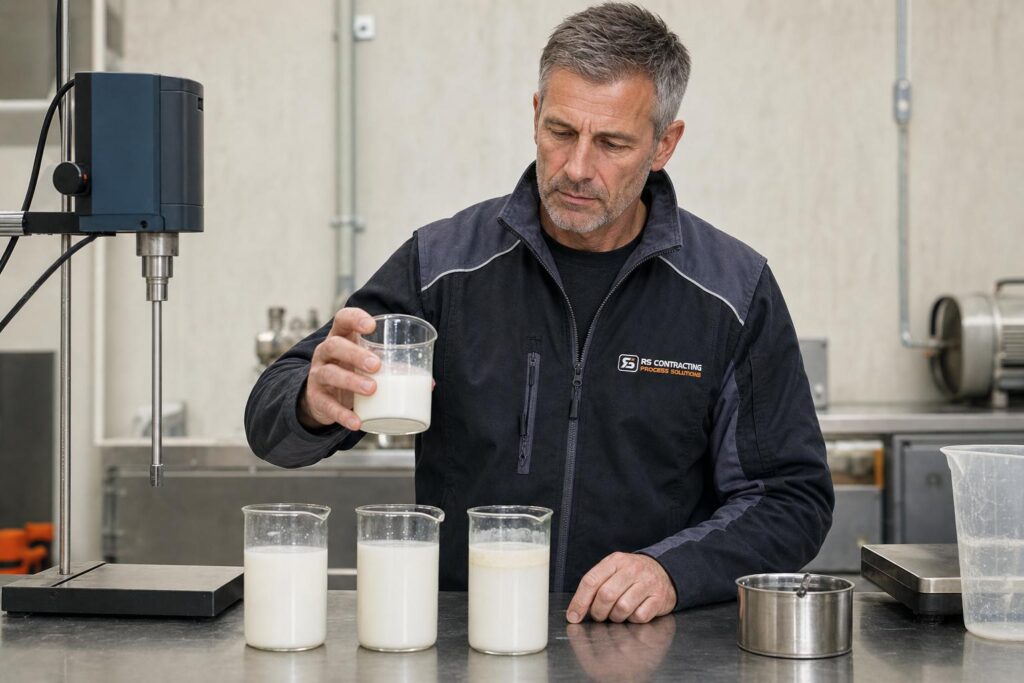
Discover how you can produce a stable oil-in-water emulsion with the right emulsifier, addition sequence, shear, tank circulation and process control.
RMC dispersing machine process time versus agitator technology
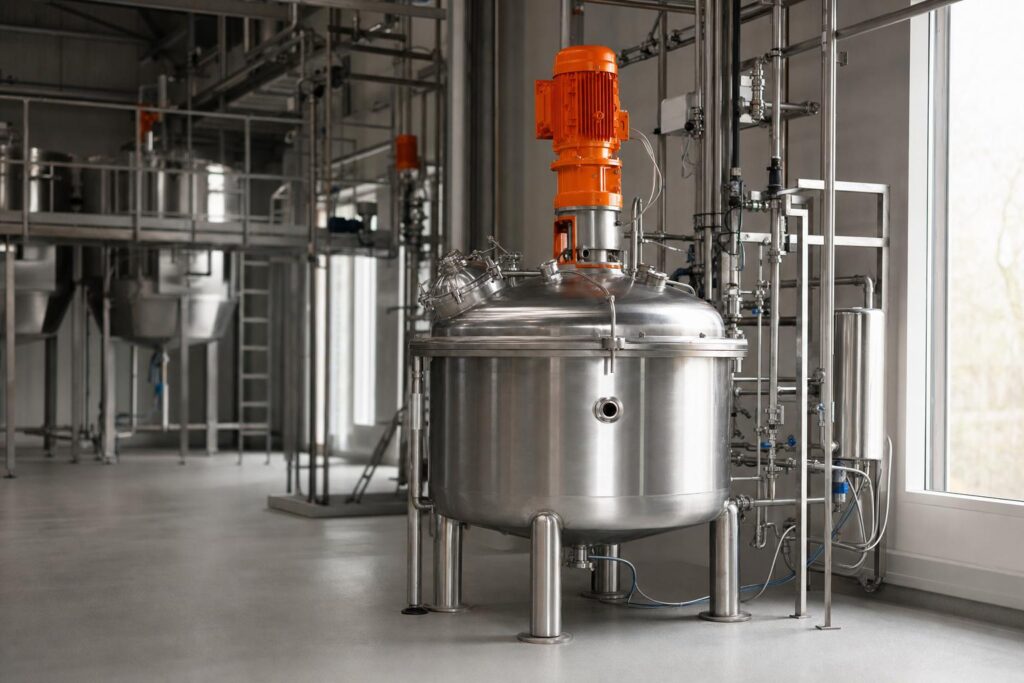
Discover RMC dispersing machine versus agitator technology process time and determine which approach speeds up your powder processing and batch cycle.
Maintenance, safety and hygiene in mixing processes

Discover how maintenance, safety & hygiene work together to reduce downtime, contamination and risks and release mixing installations under controlled conditions.
More or less shear: choose based on your process

Discover how to choose more or less shear based on the product objective, rheology and circulation, without structural loss, air entrainment or unnecessary heating.
High and low viscosity: control over every mixing process
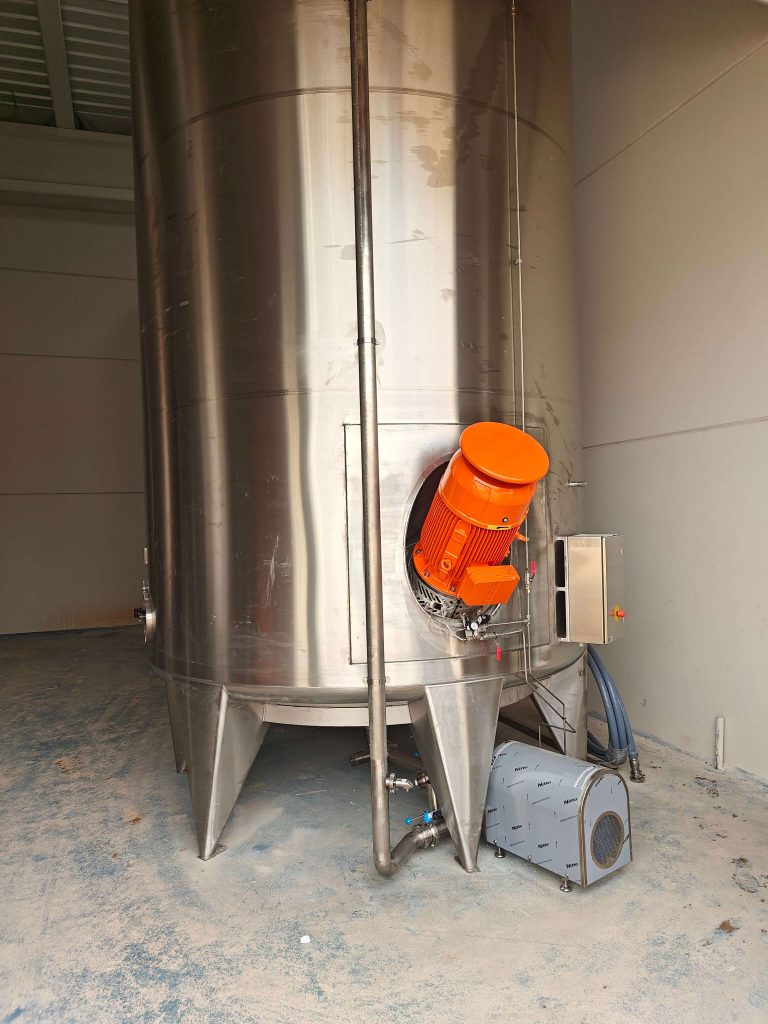
Discover how high and low viscosity in mixing processes determine machine selection, bulk flow and shear, and prevent dead zones and air entrainment.
Dispersing pigments without air entrainment for maximum colour strength

Maximum colour strength in paint and lacquer: prevent both air entrainment and poor wetting Every producer of paint and lacquer knows the importance of high colour strength. Yet in practice, it proves difficult to disperse pigments properly. Air entrainment is often identified as the cause, but the real problem lies deeper. Air is not the […]
Difference Between Inline and Batch Dispersing for Optimal Production

Process technologists and production managers are always looking for better performance. How do you achieve a consistent dispersion and efficient production? The choice between inline and batch dispersing can have a major impact on your results. In this blog, you will learn what the difference is, which problems these methods solve and which type fits […]
Select the Right Rotor-Stator Geometry for Fine Particle Dispersion

A uniform distribution of particles is often the difference between a smooth suspension and a lumpy final product. But how do you achieve an accurate particle size distribution (PSD) during fine dispersion work? The geometry of the rotor-stator, especially the slot width, plays a crucial role. This article explains how to make the right choices […]
Hygienic Design for Mixing: Faster Cleaning and Less Contamination Risk

If you work in the food, pharmaceutical, or some chemical industries, you know that hygiene directly impacts your product quality and safety. An effective CIP (Clean-in-Place) process prevents downtime and contamination. Yet cleaning still proves challenging when systems are not designed with hygiene in mind. Dead zones and improper seals quickly become breeding grounds for […]
Vacuum Mixing of Viscous Suspensions for Air-Free, Superior Results

Inline Vacuum Mixing of Viscous Suspensions: Eliminate Air, Improve Outcomes, Without a Vacuum Tank Anyone who has ever mixed a thick, viscous mass in the process industry knows the challenge: entrained air. Air in products causes foam, unnecessary volume, and problems during packaging and downstream processing. The usual solution is a vacuum tank, but this […]