Halving mixing time increases capacity only if active mixing is genuinely the bottleneck and the same product specification is achieved in the shorter time. In many batch processes, the constraint lies in powder dosing, wetting, hydration, transfer, sampling, cleaning or waiting for the next process step. The better question is therefore not how you can make the mixer run faster, but which activity actually determines the time between two released batches.
A shorter mixing phase can even be counterproductive when powders are insufficiently wetted, agglomerates remain or the particle size distribution becomes broader. This leads to rework, additional sampling or a batch that fails to pass release. Do you know which part of your cycle time is lost between starting the charge and the installation becoming available for the next batch?
Capacity is determined by the complete batch cycle
Mixing time is the period during which a mixing element actively works on the product to achieve the required distribution, dissolution, dispersion or homogeneity. This time is only one part of the total batch cycle. Practical capacity also includes filling, dosing, heating or cooling, reacting, hydrating, sampling, discharging, product transfer, CIP and any waiting time.
Achievable production is essentially determined by the usable quantity of product per batch, divided by the total time until the installation can be used again. Availability and yield also play a role: a short nominal cycle delivers little when the line regularly waits, becomes fouled, becomes blocked or product has to be reworked. Looking only at the mixer timer therefore provides an incomplete picture of capacity.
| Part of the cycle | What determines the time | Why shorter mixing does not solve this |
|---|---|---|
| Supplying and dosing raw materials | Bag handling, hopper filling, dosing sequence and dust control | The mixer cannot proceed until the required components have been added. |
| Wetting and dispersing | Powder properties, local shear, circulation and liquid supply | A shorter residence time can leave dry cores and agglomerates. |
| Hydrating, dissolving or reacting | Product-specific kinetics, temperature and concentration | More mechanical power does not always accelerate an intrinsic waiting period. |
| Discharging and product transfer | Viscosity, line resistance, pumpability and available receiving capacity | A finished product remains in the mixing tank when the next step is occupied. |
| Cleaning and releasing | Hygienic design, recipe changeover, CIP procedure and quality control | Production time merely shifts from mixing to waiting or cleaning. |
In production situations, departments also often use different definitions of mixing time. R&D measures from the final addition, production from when the agitator is switched on, and planning from the start of filling. A reliable capacity analysis therefore begins with a single timeline, from the installation becoming available until it becomes available again.
Why halving mixing time can impair product quality
A product is not ready because a preset time has elapsed, but because the required process mechanisms have progressed sufficiently. Macromixing, micromixing, wetting, dissolving, dispersing, emulsifying and hydration each have a different rate-determining step. A single shorter timer cannot simply replace those mechanisms.
Circulation determines whether the complete batch is treated
High local shear stress is insufficient when only part of the vessel repeatedly flows through the active zone. Agglomerates around a rotor-stator can be treated intensively, while product near the wall, bottom or liquid surface is barely refreshed. The effective process time is then determined by the combination of tip speed, rotor-stator geometry and bulk circulation.
Does the viscosity in your batch peak just after the powder addition? A flow pattern that works well during the initial low-viscosity phase may then later shift to insufficient circulation, channelling or a co-rotating product mass. The relationship between viscosity and mixing behaviour must therefore be assessed throughout the complete recipe, not only in the final product.
Powder addition may be the actual rate-limiting step
Powder must first pass through the liquid surface, become wetted and break apart before dissolving or dispersing can begin. Adding it too quickly creates floating islands, dust formation or agglomerates with a wet outer layer and a dry core. Additional post-mixing time sometimes partially compensates for this, but does not address the cause.
A common assumption is that a more powerful mixing element automatically produces a shorter batch. In reality, the feed rate may be limited by wettability, available liquid circulation or the rate at which air escapes from the powder. Targeted inline powder induction may then be more relevant than increasing the agitator speed.
“A higher rotational speed rarely shortens the mixing phase, but it often entrains excessive amounts of air into the product. In practice, removing that air takes more time than you gain.”
Bart Brouwer
Sales Manager
More shear is not automatically better either. A narrower passage between rotor and stator generally increases local energy input, but can also cause air entrainment, heating, excessive degradation or an undesirable change in a thixotropic product. Without a product trial, it is not possible to establish reliably whether higher intensity produces the same quality in less time.
Hydration and reaction have their own timescale
Hydration, dissolution and chemical conversion are not determined solely by mixing intensity. Mixing brings components together and renews boundary layers, but diffusion, swelling, temperature-dependent behaviour or reaction kinetics may then determine the remaining time. Once good distribution has been achieved, a further increase in shear sometimes adds little.
Does the batch continue to change in viscosity after the mixer has stopped? The set mixing time is then probably combined with a product-specific maturation or hydration time. That period may potentially take place outside the main installation, but cannot safely be removed from the recipe without analysing the product specification.
Find the true capacity constraint in the batch records
The bottleneck is the process step whose available capacity limits the output of the overall system. You will not find it using an average mixing time, but by recording the actual sequence, waiting times and quality checkpoints for each batch. Hidden time between formal process steps is particularly important.
-
Define fixed start and end points. Record from the moment the installation is available until the moment it becomes available again after discharging and cleaning.
-
Separate active process time from waiting time. Record filling, dosing, mixing, dispersing, hydrating, sampling, waiting for analysis, discharging, transfer and cleaning separately.
-
Link time to product condition. Record when viscosity, homogeneity, particle size distribution, density or another release parameter actually comes within specification.
-
Check for constraints upstream and downstream of the mixer. Determine whether raw materials, operators, receiving tanks, heat transfer, pumps and packaging lines are available when the mixing installation needs them.
-
Investigate variation, not just the average. Large differences between batches often indicate manual dosing, varying raw materials, wear, contamination or inconsistent operating actions.
This provides a concrete answer to the question of where cycle time is lost: each time segment is assigned a cause, owner and quality criterion. A queue for QC requires a different intervention from poor powder wetting, and slow product transfer requires a different solution from insufficient dispersion. Only after making this distinction does it become clear whether shorter mixing actually produces additional saleable product.
Capacity measures that intervene before shorter mixing
The best capacity measure addresses the constraining step and prevents time gained elsewhere from reappearing as waiting time. The order of intervention is therefore important: stabilise the process first, then eliminate avoidable downtime and only then modify the mixing technology. This prevents a mechanical investment from masking an organisational or product-specific problem.
Prepare raw materials while the installation is producing
Pre-weighing, recipe-controlled staging and timely filling of a powder hopper can move activities outside the critical batch cycle. Supporting equipment such as storage hoppers, fluidisers and lump breakers helps when poor powder flow interrupts dosing. The gain then comes not from more intensive mixing, but from the installation spending less time waiting for material.
This approach is not automatically suitable for hygroscopic, reactive or explosive powders. Dust properties, cross-contamination, cleanability and ATEX zone classification must form part of the design. The ATEX Directive 2014/34/EU, among others, is relevant to equipment in a potentially explosive atmosphere.
Introduce powder directly into an active liquid flow
Targeted powder induction can partially combine the successive steps of charging, wetting and dispersing. The powder then comes into controlled contact with a liquid flow in which sufficient circulation and local shear are available. This reduces the likelihood that large agglomerates will first form and subsequently have to be broken down again.
Powder induction is not the right choice for every recipe. Poorly flowing powders, very rapid viscosity build-up, sensitivity to foaming and a limited liquid window may require special provisions or a different dosing sequence. A trial using the actual product is then necessary to establish whether induction remains stable.
Separate bulk mixing from intensive treatment
Bulk circulation and high-shear dispersing do not always have to be performed by the same mixing element. A jet stream mixer can refresh the vessel contents, while an inline rotor-stator intensively treats a controlled side stream. During recirculation, residence time and the number of passes then determine the final distribution.
This combination is particularly useful when the tank is geometrically difficult to mix or when the required local shear is much higher than the intensity desirable for the complete batch. The choice between inline and batch dispersing depends on viscosity, particle behaviour, the desired particle size distribution and the cleaning strategy.
Depending on the identified bottleneck, the solution may therefore lie in dust-free powder induction, inline dispersing via recirculation or stronger bulk circulation without unnecessary air entrainment. These functions must be selected as part of the overall process line, not as an isolated replacement for a timer setting.
The right machine for your process
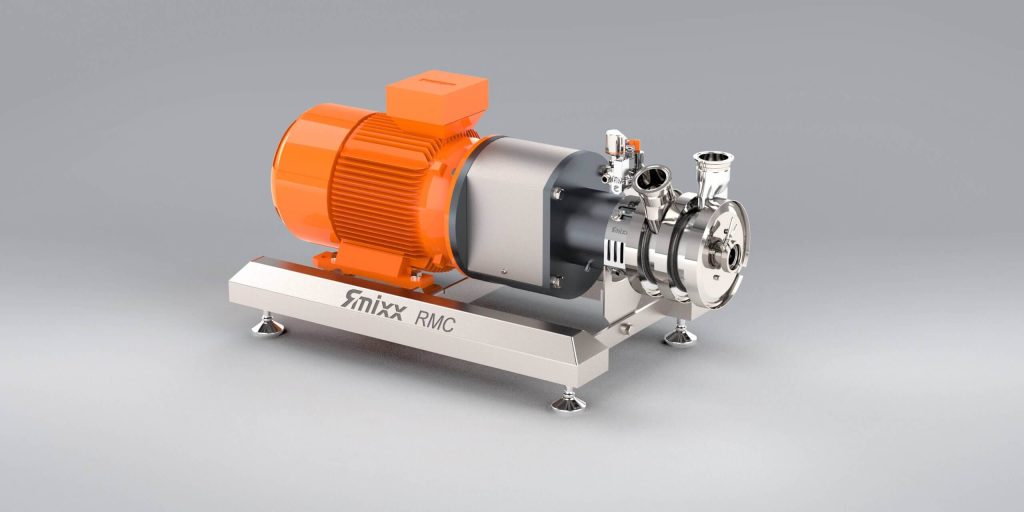 RMC Inline powder dissolving machineInducts powders without dust, dissolves them and disperses them in a single pass. No lumps, no losses during addition.Discover the RMC›
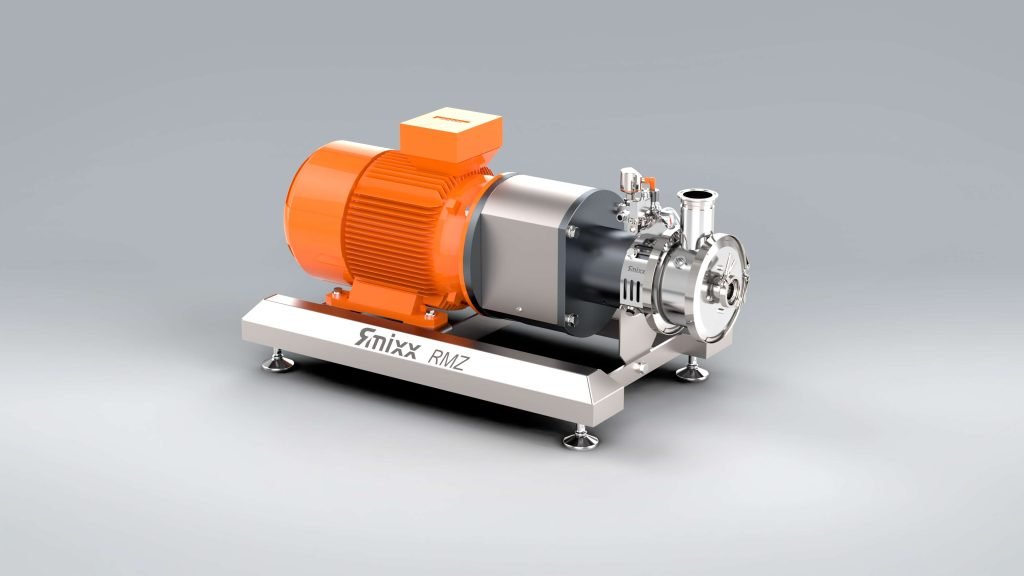 RMZ Inline dispersing machineDisperses directly in the line or via recirculation. Produces emulsions and suspensions quickly and reproducibly.Discover the RMZ›
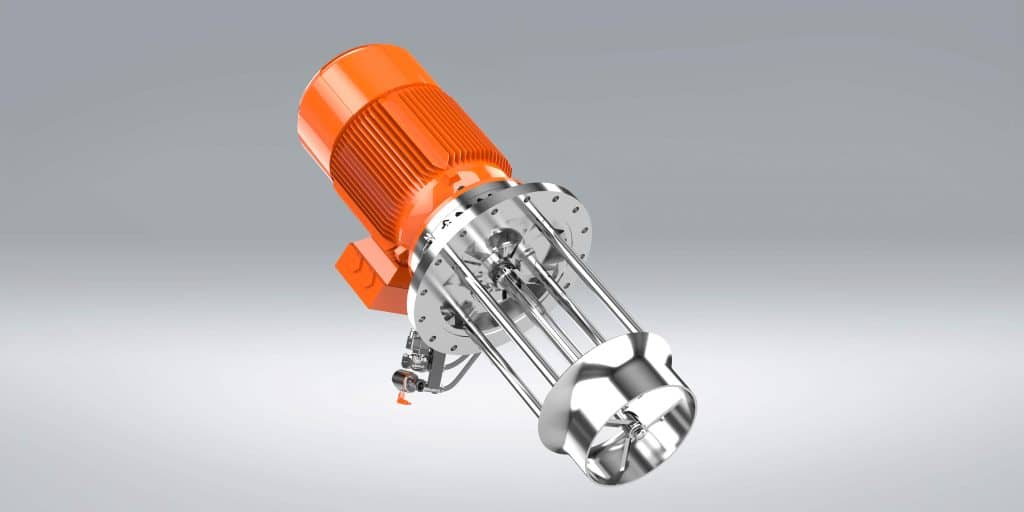 RMY Jet stream mixerMixes homogeneously at a range of viscosities without air entrainment. Available as top entry and side entry.Discover the RMY›
Move product-specific waiting time out of the mixing tank
When the product only needs to hydrate, mature or deaerate after good distribution has been achieved, a separate buffer tank can free up the main installation sooner. This only increases line capacity if transfer is reliable and the next tank can hold the product without settling, phase formation or heat loss. Otherwise, the problem is merely moved elsewhere.
Sampling and release also deserve attention. Inline or atline measurements can replace a fixed safety margin with a demonstrable endpoint, provided that the measurement method is representative and validated. In pharmaceutical processes, changes must also comply with GMP, the documented process validation and, where relevant, EU GMP Annex 1.
Shorten cleaning without increasing the hygiene risk
CIP time is production time when the same installation may only restart after cleaning. Dead zones, poorly draining lines, inaccessible surfaces and unfavourable valve positions increase both the cleaning time and the risk of residual product. Hygienic design in accordance with relevant EHEDG or 3-A Sanitary Standards principles can therefore provide more capacity value than a shorter mixing phase.
Cleaning must not simply be shortened to meet the schedule. Cleaning parameters and inspection criteria must correspond to product risk, allergens, microbiology and recipe changeovers. An appropriate maintenance approach for process installations also helps prevent wear and contamination from causing an unnoticed increase in cycle time.
When halving mixing time is a worthwhile objective
Halving mixing time is a defensible objective only when the mixing phase demonstrably forms the constraint, the selected technology accelerates the limiting mechanism and all critical quality characteristics are retained. This must be substantiated with product trials and representative process conditions. A laboratory result cannot automatically be transferred to a production vessel.
| Observation | Likely meaning | Appropriate direction |
|---|---|---|
| The batch is mainly waiting for the powder supply | Dosing or wetting limits the cycle | Investigate hopper handling, induction and the dosing sequence. |
| The bulk quickly becomes homogeneous, but agglomerates remain | Local shear or the number of effective passes is insufficient | Investigate rotor-stator treatment, recirculation or a batch disperser. |
| The specification continues to change without active mixing | Hydration, maturation or reaction determines the time | Investigate a buffer step or modified process conditions. |
| The mixer is ready but cannot discharge | Downstream capacity or transfer is the bottleneck | Address receiving capacity, pumpability or scheduling. |
| Batches differ considerably with the same recipe | The process is insufficiently controlled | Standardise dosing, raw material condition, operation and maintenance before acceleration. |
A high-shear dispersing jet stream mixer can, for example, combine bulk circulation and intensive treatment. This does not automatically make it suitable for every capacity issue. A different intervention remains necessary in the case of a product-specific hydration time, an occupied filling line or a long cleaning cycle.
Scaling up changes more than just the mixing time
A shorter mixing time at laboratory scale does not prove that the same ratio can be achieved at production scale. Vessel diameter, liquid height, position of the mixing element, flow path, heat transfer and the ratio between the active zone and batch volume change during scale-up. As a result, macromixing and local dispersion may diverge.
At production scale, does your product actually flow past the wall and bottom, or does mainly the centre move around the shaft? This is answered through a flow assessment and a product trial under representative viscosity, filling level and dosing sequence. Simply copying the rotational speed or mixing duration from a test vessel does not provide reliable equivalence.
For scale-up, the critical process functions must therefore be defined first: what circulation is required, where does shear stress arise, how many effective passes are required and which product property determines the endpoint? RS Contracting can perform trials with the customer’s product in Coevorden or on site. This links machine selection and process settings to measurable quality rather than to an assumed time saving.
Frequently asked questions about mixing time and capacity
Does a higher rotational speed always increase capacity?
No. A higher rotational speed can increase local shear and circulation, but can also cause air entrainment, heating, foaming or product damage. It only helps when mixing intensity is the limiting factor and the complete batch passes through the active zone sufficiently. The appropriate setting differs according to machine configuration, viscosity, recipe and desired end result.
How do you determine whether the mixer is the bottleneck?
Record the complete cycle from installation release to the next release and divide it into dosing, mixing, waiting, discharging, cleaning and quality control. The mixer is only the bottleneck when the mixing step structurally limits the system rate and shortening it directly enables additional released production. A full receiving tank, for example, indicates a downstream constraint.
Can an inline dispersing machine replace a batch mixer?
Sometimes, but not always. Inline dispersing provides a defined active zone and can make powder wetting, emulsion formation or agglomerate breakdown controllable. However, the tank still requires sufficient circulation unless the complete process is genuinely continuous. Cleanability, recirculation, residence time and product-specific shear determine whether replacement is technically appropriate.
Which measurement determines when a batch is ready?
That depends on the function of the process. Possible endpoints include stable viscosity, homogeneous composition, complete dissolution, the desired particle size distribution or a specified emulsion or suspension stability. The selected measurement must be representative of the complete batch; a single sample from a favourable position may miss local imperfections.
Focus on released output, not the mixing clock
Higher capacity is achieved when you shorten the constraining process step without losing yield, reproducibility or product specification. Halving mixing time can form part of this, but only after dosing, wetting, hydration, transfer, cleaning and downstream availability have been ruled out as bottlenecks. The relevant performance indicator is not the time for which the motor runs, but the time between two usable, released batches.
Therefore, begin with unambiguous cycle-time recording and link each time segment to a physical mechanism or organisational cause. Then test only the measure that affects that mechanism, under representative conditions and using predefined quality criteria. This prevents a shorter mixing phase from ultimately causing more rework, downtime or process variation.